
Wetlands
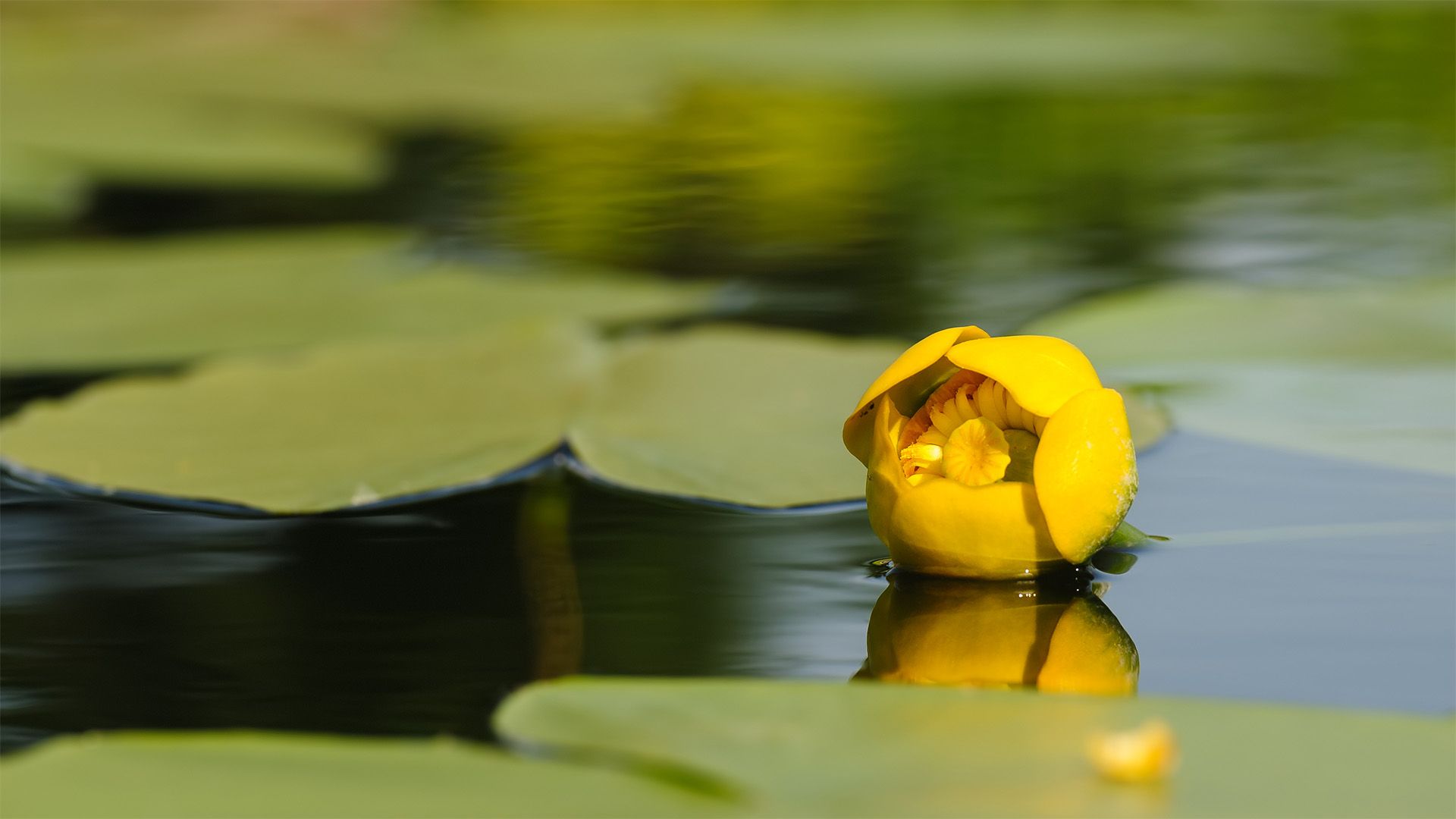
A Wetland is described by the plant species that live in it. If an area is wet enough for long enough to support a majority of plants that are adapted to wet conditions then you have a wetland.
A wetland is defined by its hydrology, soils, and vegetation. If an area remains saturated or flooded long enough during the growing season to support plants adapted to wet conditions, it qualifies as a wetland. In most scientific definitions, wetlands must have:
-
Water at or near the surface for a significant part of the year
-
Hydric soils (soils formed under saturated conditions)
-
Hydrophytic vegetation (plants adapted to waterlogged soils)
Plant species adapted to very moist or saturated conditions are called hydrophytes. These include pond lilies, cattails, sedges, tamarack, and black spruce. Marsh flora may also include species such as cypress and gum in warmer regions.
Wetlands are among the most biologically productive ecosystems on Earth. They support high biodiversity, particularly for amphibians, reptiles, birds such as ducks and wading birds, fish, invertebrates, and mammals including beaver, muskrat, and otter. While many wetlands are freshwater systems, some—such as salt marshes—contain high salt concentrations and support salt-tolerant plants and animals including shrimp, shellfish, and specialized grasses.

Types of Wetlands
There are many types of wetlands. Scientists commonly divide them into the following groups:
-
Marshes
-
Swamps
-
Bogs
-
Fens
Marsh
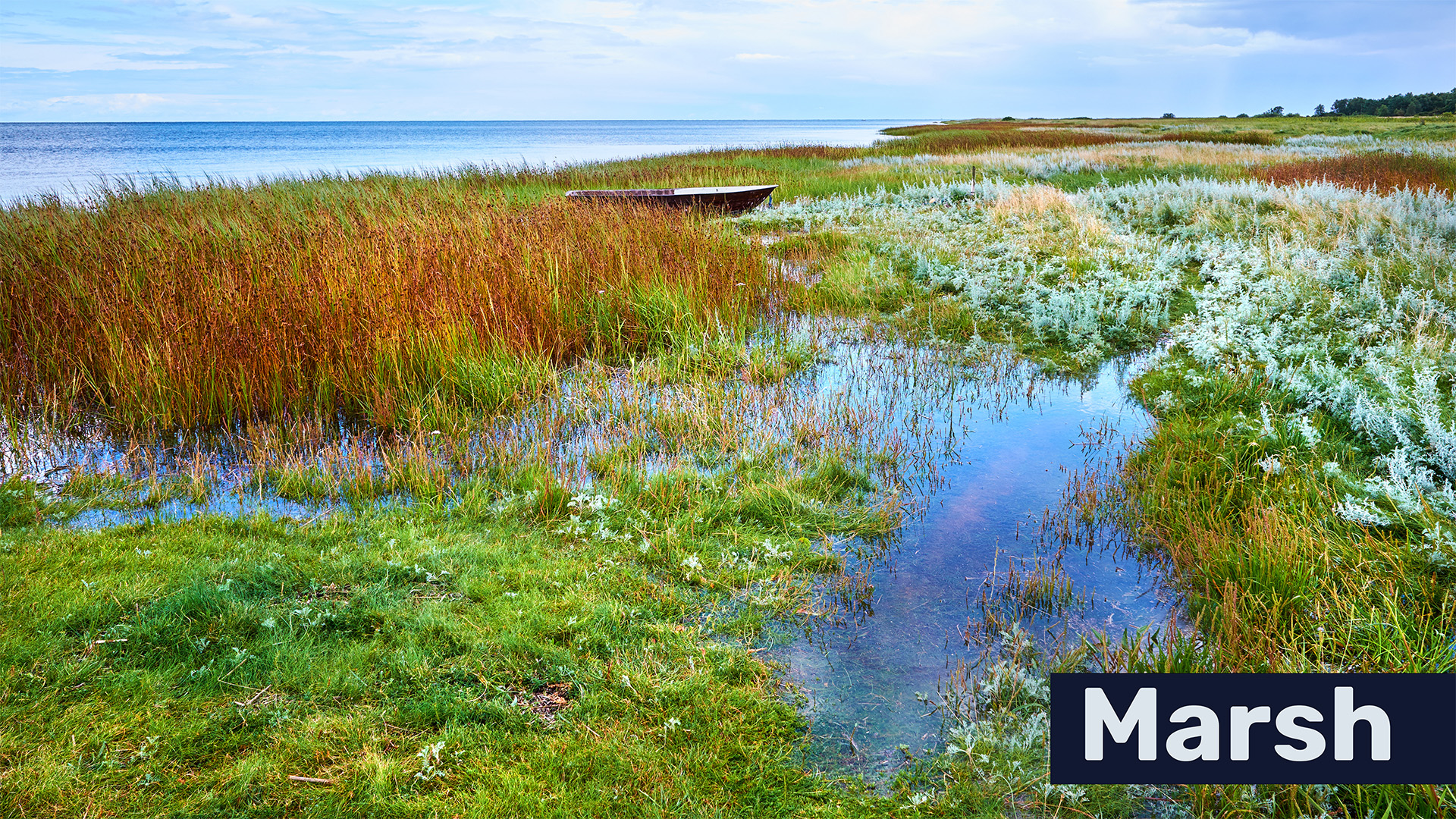
Marshes are open, sunlit wetlands dominated by soft-stemmed plants such as grasses, sedges, and rushes that rise from saturated soils or shallow standing water. In freshwater marshes, cattails and pond lilies may sway in slow water, while coastal salt marshes are filled with salt-tolerant grasses shaped by the tides. Because they are shallow and nutrient-rich, marshes are among the most productive ecosystems on Earth, alive with insects, amphibians, fish, and nesting waterfowl. Vast examples include the prairie potholes of central North America and the sweeping sawgrass marshes of the Everglades, where water moves slowly across the landscape like a wide, shallow river.
Swamp
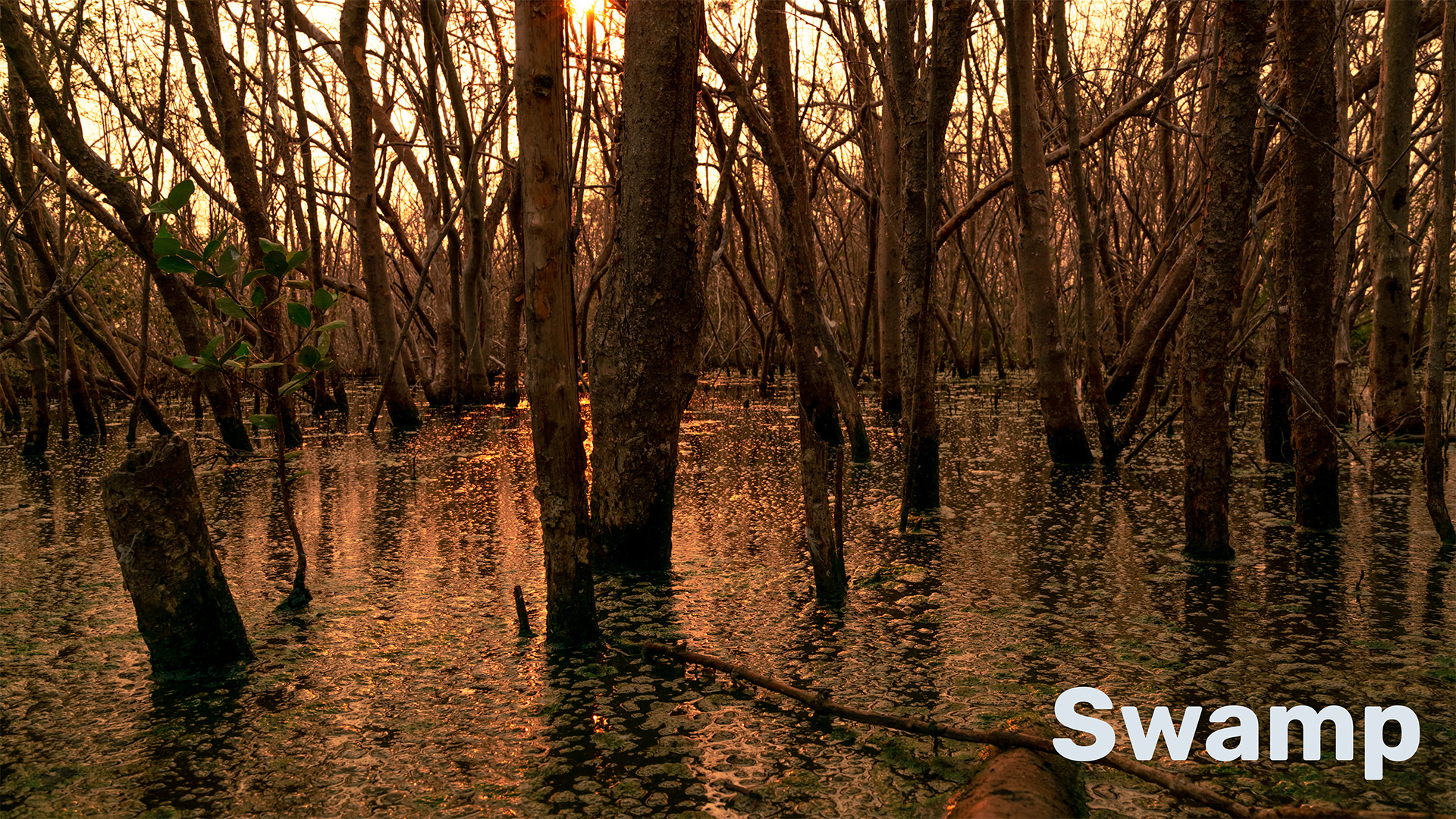
Swamps are forested wetlands where trees and shrubs dominate the waterlogged ground. In these shadowed environments, trunks may rise directly from standing water, their roots adapted to survive in oxygen-poor soils. Bald cypress swamps of the southeastern United States form cathedral-like groves with flared bases and knobby “knees” protruding above the surface, while red maple swamps color northern floodplains in autumn. In tropical and subtropical regions, mangrove swamps line coasts with tangled prop roots that shelter fish and crustaceans. Swamps slow floodwaters, trap sediments, and provide critical habitat for birds, reptiles, mammals, and countless invertebrates.
Bog
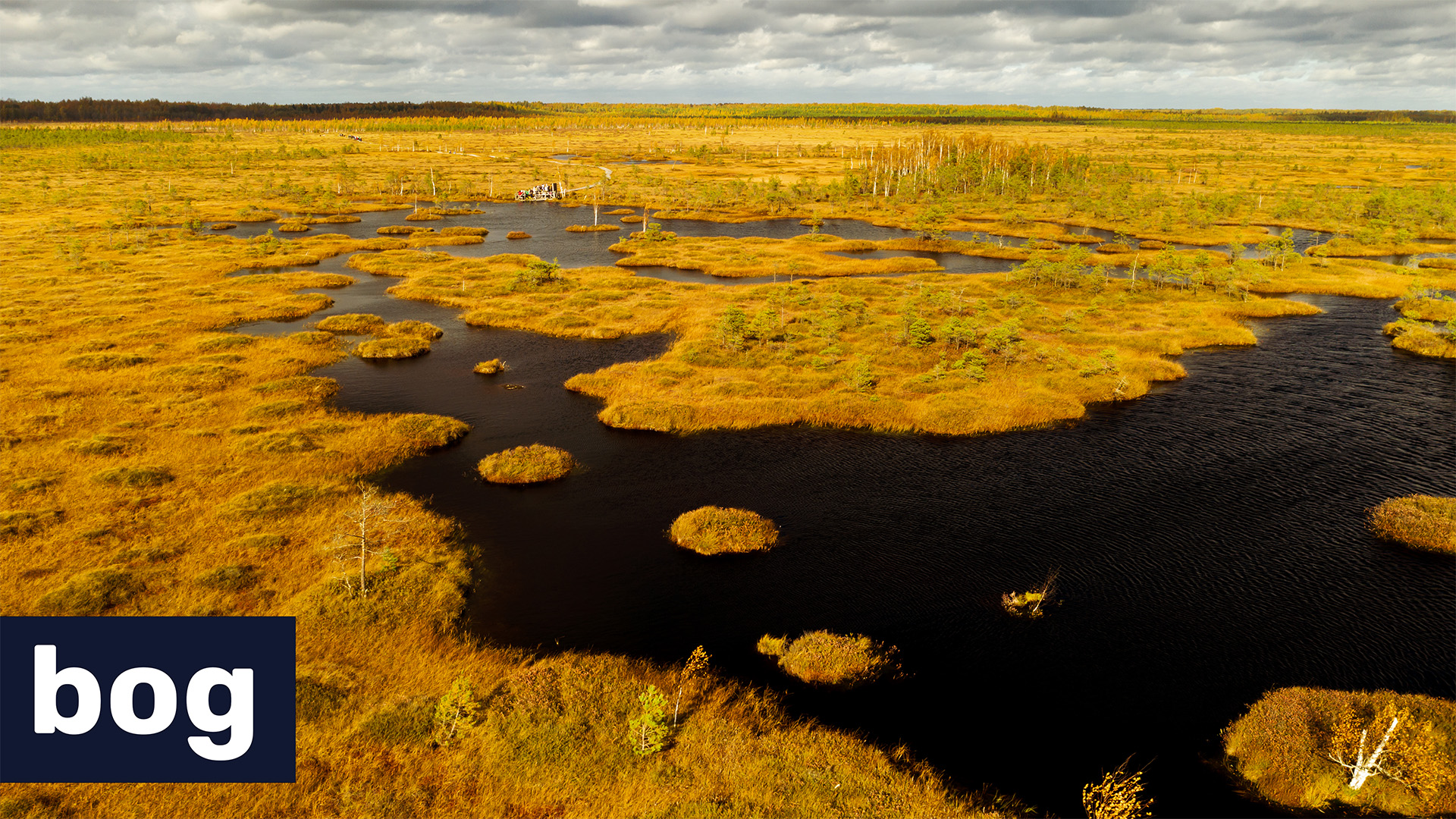
Bogs are quiet, spongy wetlands built over centuries from partially decayed plant material known as peat. They are typically fed only by rainfall, which makes them low in nutrients and often acidic. Thick carpets of sphagnum moss dominate the ground, creating a soft surface that can tremble underfoot, while specialized plants such as cranberries and carnivorous sundews thrive in the nutrient-poor conditions. Because decomposition is slow in waterlogged, oxygen-poor soils, peat accumulates layer by layer, storing large amounts of carbon. Many bogs form as lakes gradually fill in over time, representing a slow and patient stage in ecological succession.
Fen
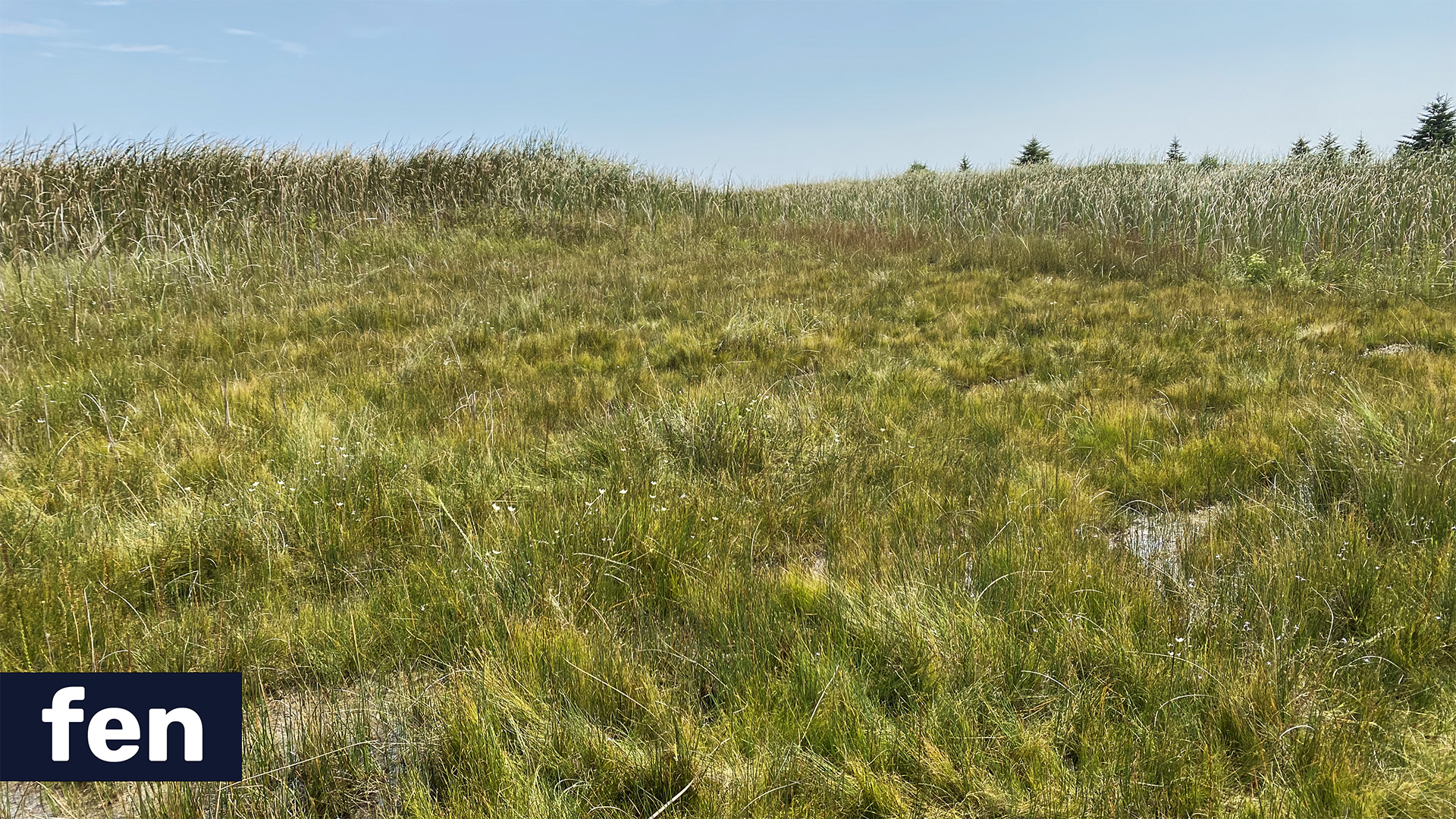
Fens resemble bogs at first glance but differ in an important way: they are fed by groundwater or surface runoff rather than rainfall alone. This steady mineral input makes their waters neutral or slightly alkaline and generally more nutrient-rich than bogs. Sedges, grasses, and wildflowers often dominate, creating open, grassy wetlands that can support a high diversity of plant species, including many rare specialists. Because of their distinct water chemistry, fens support communities different from those of bogs and are not simply stages in lake filling, but unique ecosystems shaped by the quiet flow of mineral-rich groundwater.